Free book · Open source · Free companion app

Power System Dynamics of Renewable-Dominated Grids

A graduate textbook and an open toolbox, built together. Every model, algorithm and numerical result in the book is reproducible with PSDAT — the equations you read and the code that solves them are, by construction, the same.

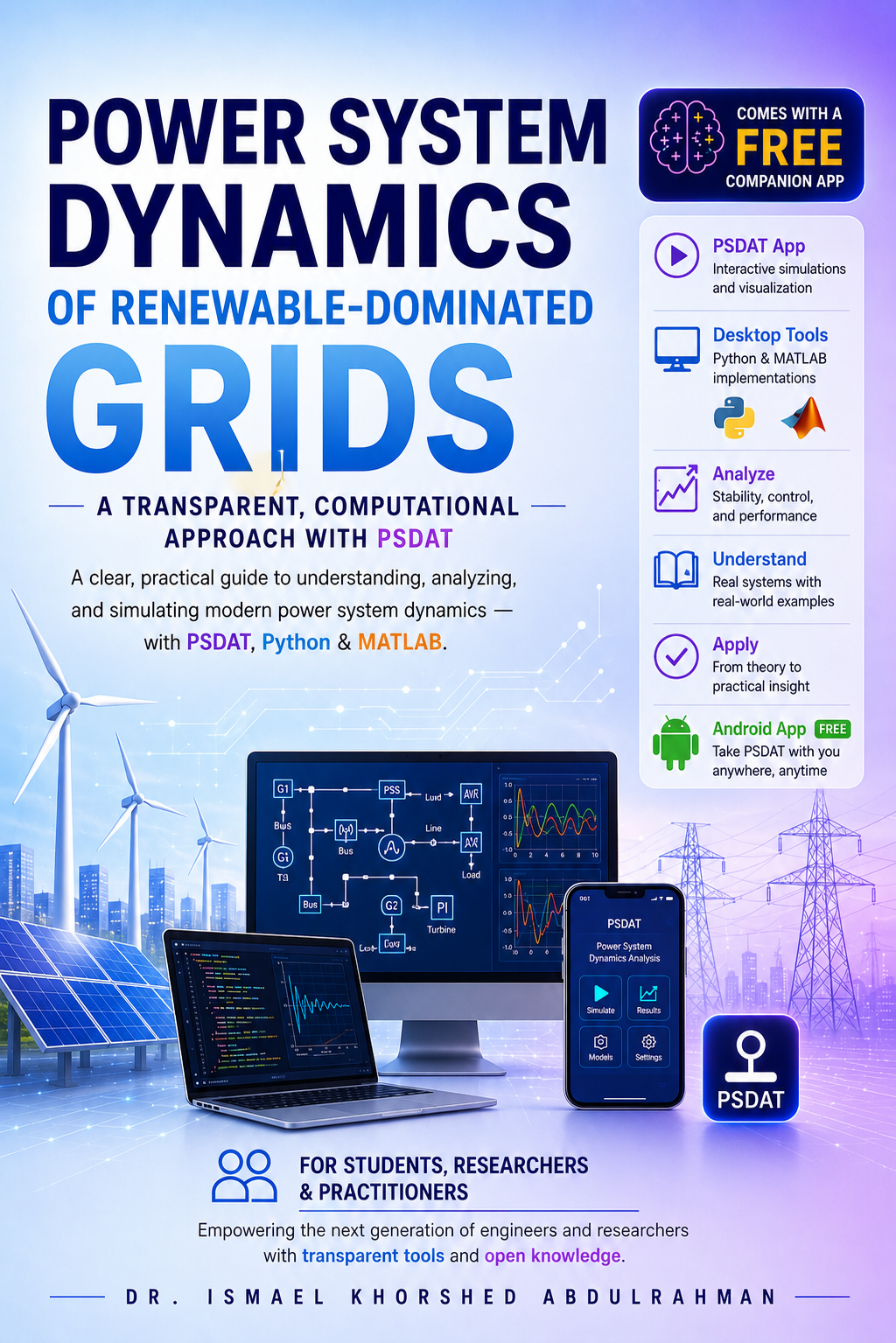
Book cover — Power System Dynamics of Renewable-Dominated Grids

Read it, run it, push on it

Most power-system texts stop at the equation. This one hands you the solver that produced every number on the page.

1

Read

Twenty-four chapters from the algebraic network and the synchronous machine through grid-forming converters to wide-area damping control — derived in full, with worked examples and end-of-chapter problems.

2

Run

Every model exists twice: a readable Python reference implementation and a MATLAB edition checked for numerical parity against it. No compiled black box anywhere in the chain.

3

Push on it

Change a reactance, trip a line, raise the inverter share, and watch what the theory predicted actually happen — on your desktop or in your hand.

The book

Free to read and download. Seven parts, twenty-four chapters, five appendices.

Part IFoundations and the transparent-computation philosophy — the modern grid, the DAE formulation, the network.
Part IISynchronous machines and their controls — machine models, excitation, governors, fuzzy control.
Part IIIInverter-based resources — VSCs, grid-following and grid-forming, PV, wind, storage, grid support.
Part IVSystem dynamics and stability — assembly, transient, small-signal, voltage and frequency stability.
Part VCompensation, control and the wide-area grid — FACTS, damping control, phasor measurement units.
Part VISystem operation and economics — security assessment and market economics.
Part VIIResearch and reference — open problems and how to take the toolbox further.
AppendicesPSDAT reference, test-system data, mathematical background, worked solutions, glossary.
What's in every chapter

  • Learning objectives up front, a summary and problems at the end
  • Worked examples carried through to numbers
  • PSDAT laboratories — hands-on, indexed in their own list
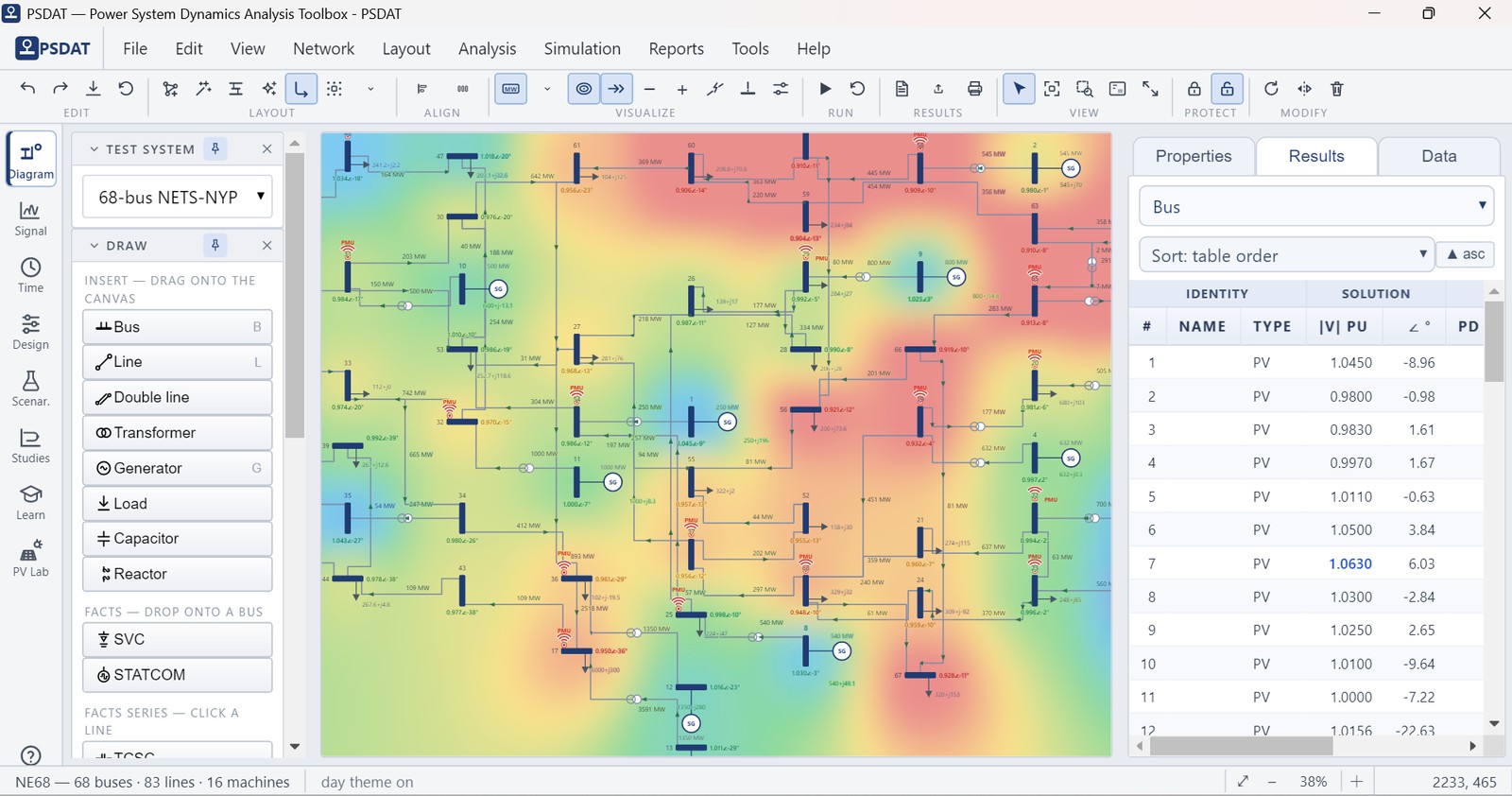
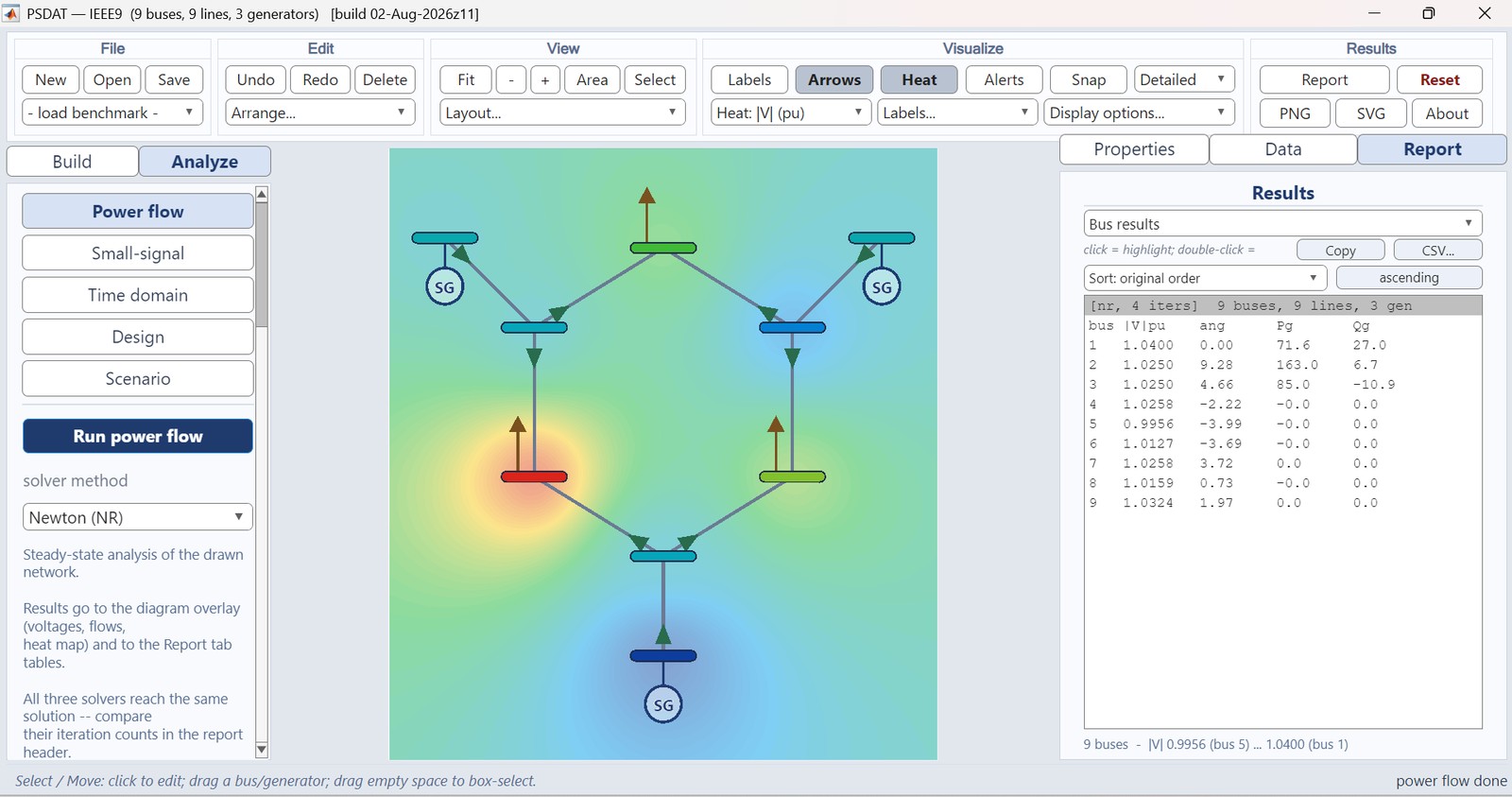
  • Standard test systems: IEEE 9, 14, 30, 39, 57, 118 and 300 bus, Kundur two-area, 16-machine 68-bus

Get the PDF

The complete book, free to read and download.

⬇ Download the book (PDF)

The software

The same toolbox in two languages, checked against each other. MIT licensed.

🐍 Python — the reference implementation

Readable, dependency-light, cross-platform. Power flow, time-domain simulation, linearization and modal analysis, FACTS models, a full GUI, and notebooks.

# clone and run
git clone https://github.com/ismaelabdulrahman/psdat-book.git
cd psdat-book/python
pip install -r requirements.txt
python psdat_gui.py

Python 3.9+ · NumPy, SciPy, Matplotlib. On Windows, Run PSDAT.bat does it for you.

📐 MATLAB — numerical parity

The same models in MATLAB, with a graphical app, a self-test, a parity check against the Python engine, and optional Simulink export.

% add matlab/ to your path, then
PSDAT_App        % graphical application
PSDAT_Demo       % scripted demonstration
PSDAT_SelfTest   % verify the installation
PSDAT_Parity     % check against Python

MATPOWER optional · Simulink optional.

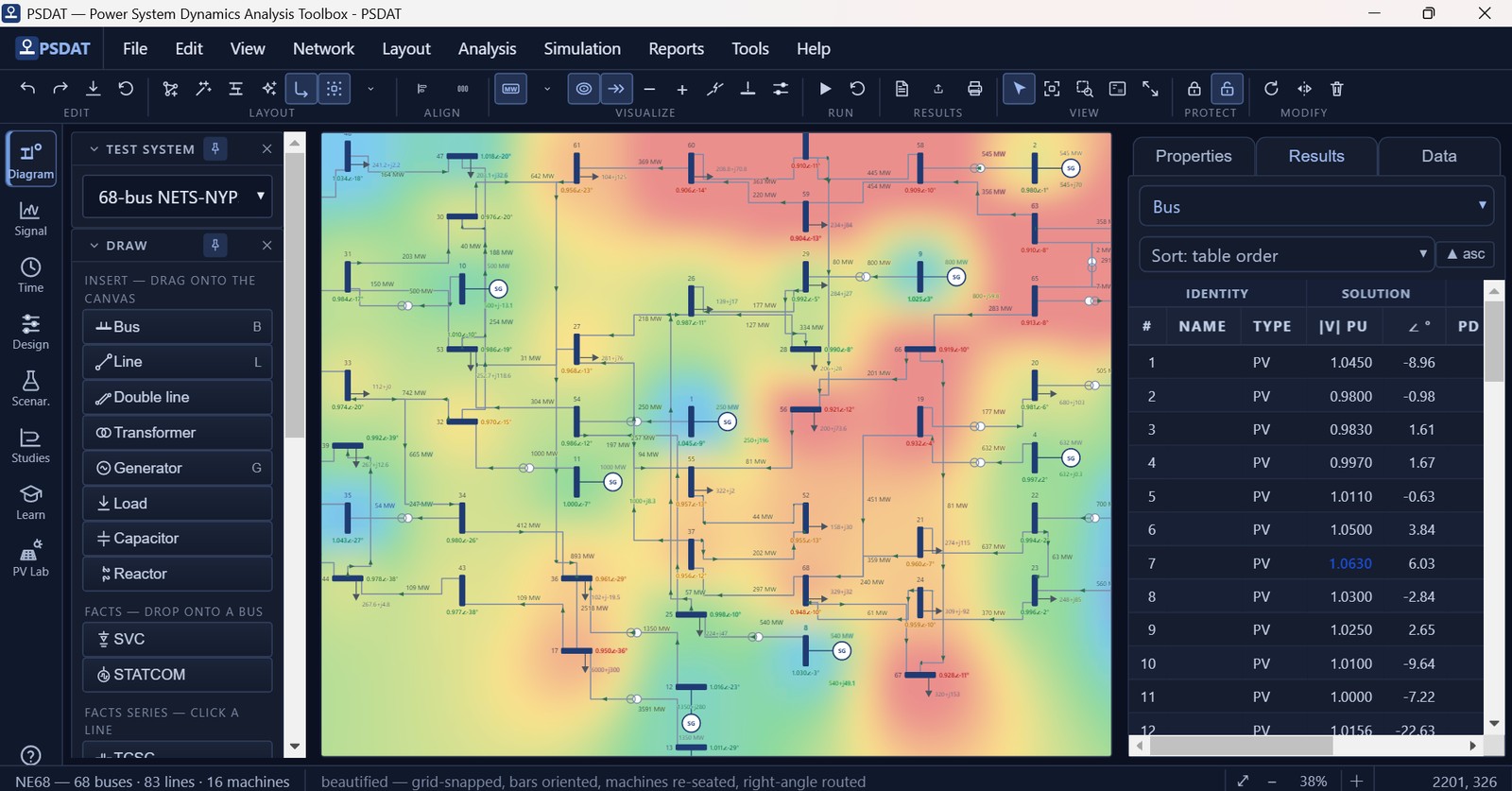
See it running — the desktop application, in Python (dark & day themes) and the MATLAB edition.

PSDAT Python desktop — 68-bus NETS-NYP network with reactive-power heat map, dark theme
Python desktop — 68-bus NETS-NYP system with a live power-flow heat map (dark theme)
PSDAT Python desktop in day theme with PMU placement
Python desktop — day theme, with PMU placement
PSDAT MATLAB edition — IEEE 9-bus power flow with results table
MATLAB edition — IEEE 9-bus power flow

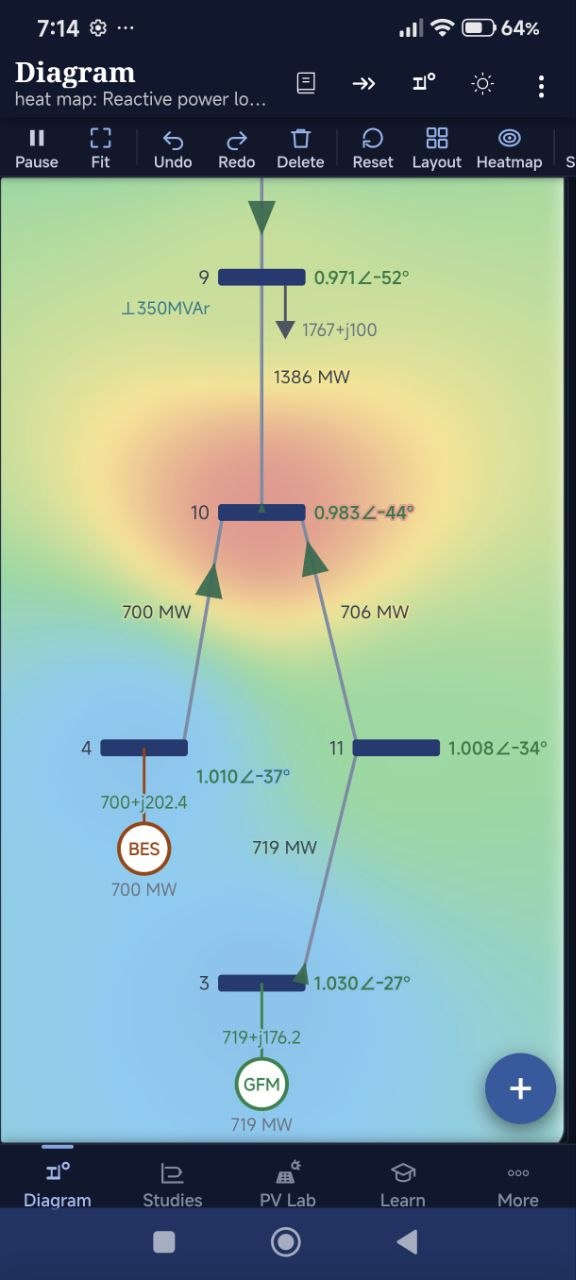
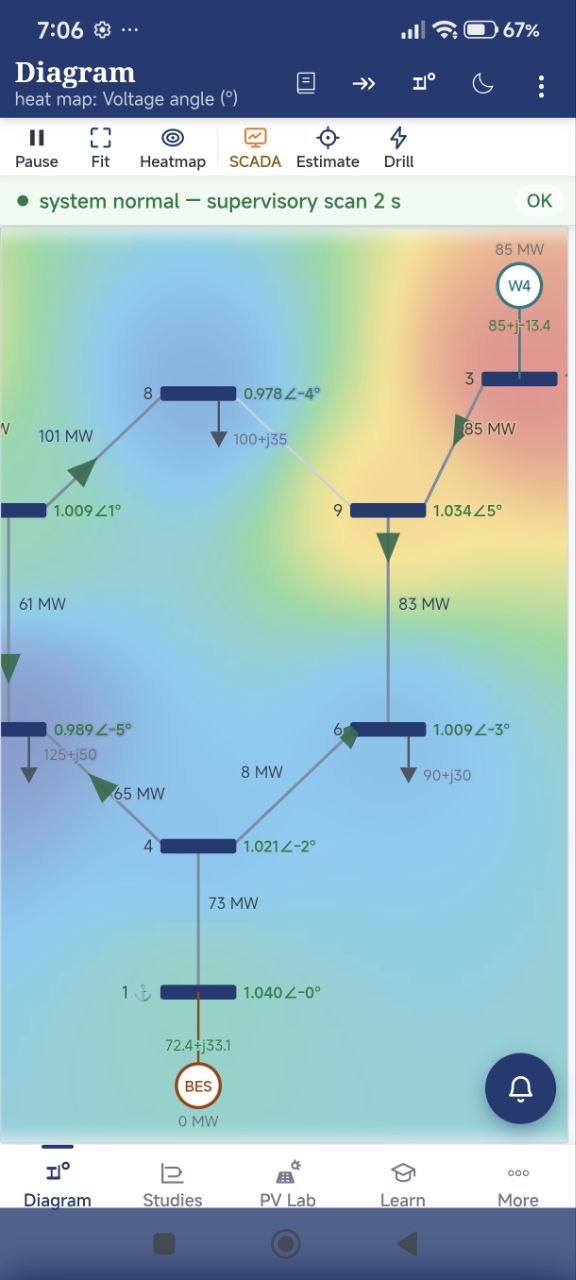
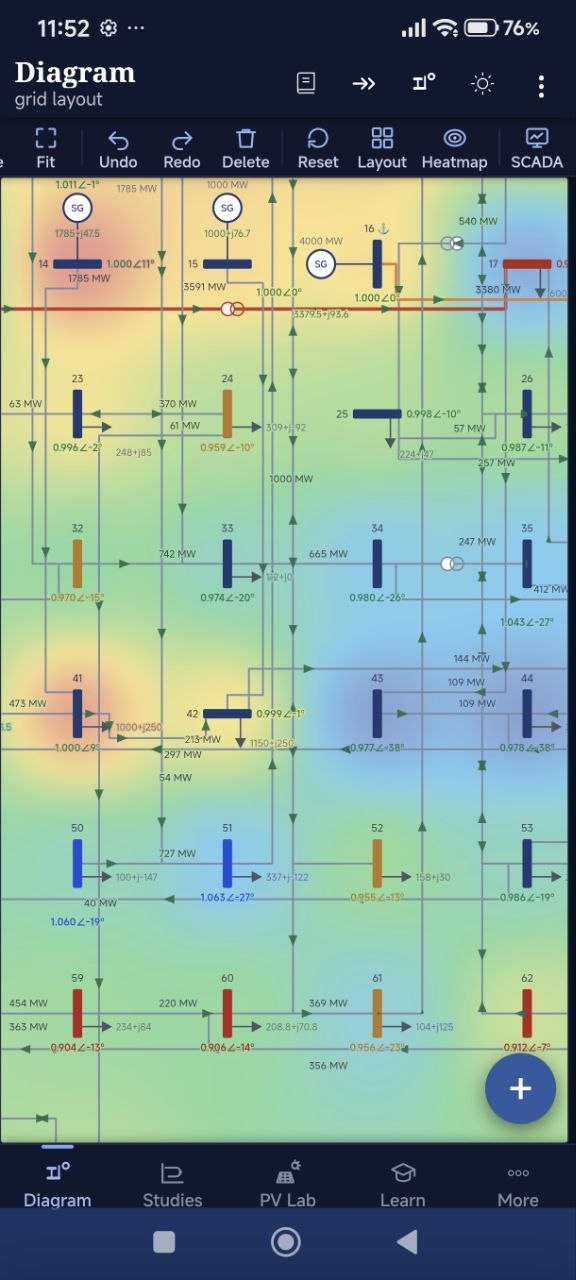
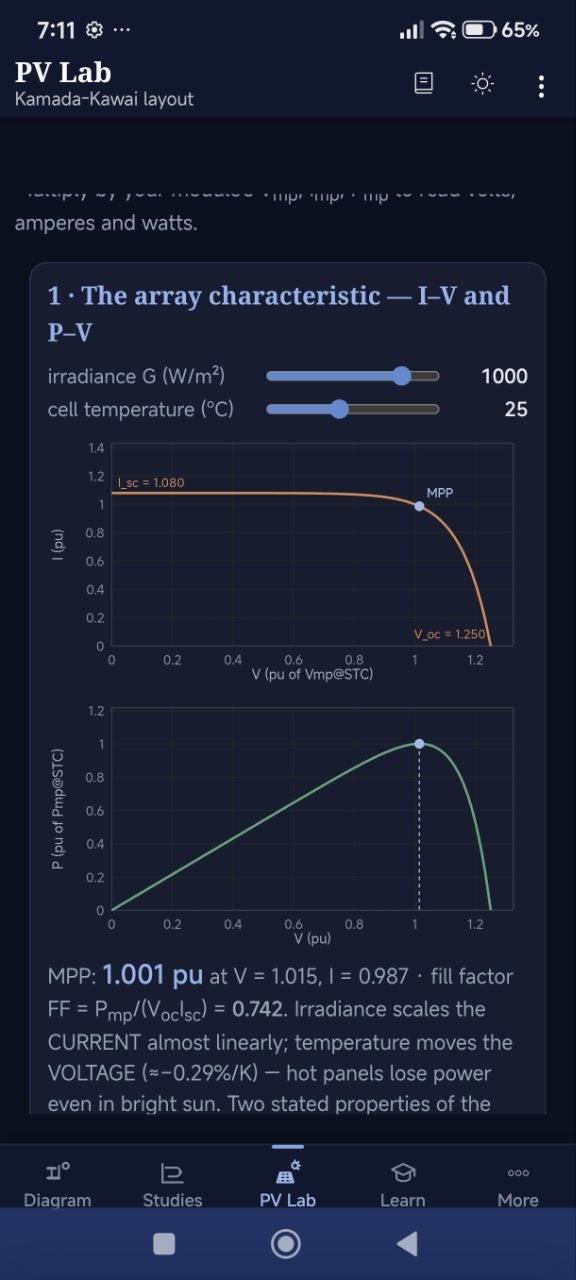
PSDAT Mobile — the free companion app

The same engine, on your phone, fully offline. Build a network by touch and watch the heat map redraw as the power flow re-solves.

Single-line diagram with reactive-power-loss heat map Supervisory SCADA mode with state estimation Multi-machine interconnection, grid layout Photovoltaic laboratory in night theme

What it does

  • Diagram — touch-editable single-line diagram, live power flow, selectable heat-map variable, animated flows
  • Studies — transient, small-signal and modal, frequency and voltage, on-device
  • PV Lab — I–V and P–V curves, partial shading with bypass diodes, reserve and IEEE 1547-style grid support
  • Learn — a guided theory section mirroring the book
  • SCADA — supervisory scan, state estimation and drill-down
  • Night and day themes · works with no network connection
Free · closed testing

How to get on the tester list

PSDAT Mobile is currently in closed testing on Google Play — completely free. Here's how to get on the tester list:

  1. Use an Android phone or tablet.
  2. Add your email using this short form — enter the Google (Gmail) account you use on your Android device. Your email stays private; only the author sees it.
  3. Once you've been added, open the app on Google Play and install it.

Because it's a closed test, only approved testers can install it. Your email stays private — only the author sees it — and you'll get access shortly after being added.